
From the Blues Matters archive. Originally published in issue 93 (December 2016 / January 2017), pp. 60–63.
Words: Andy Hughes | Photography: Pierre Ménard
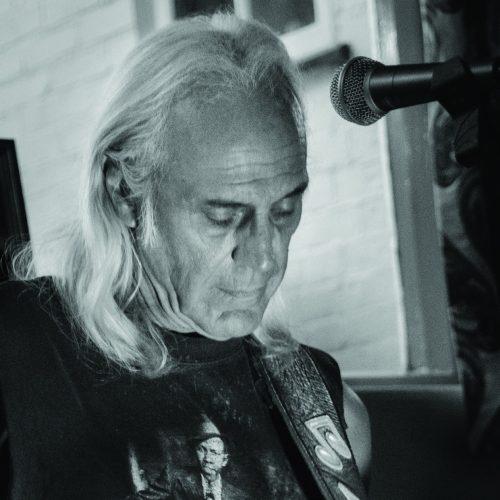
Guy Belanger has done much to popularise the harmonica across the vibrant blues scene of Montreal, and through the North American continent. He combines a busy live schedule with recording his own albums, and frequent contributions to film and television musical scores, commercials and album sessions.
The summer of 2016 saw Guy invited to play two sets – acoustic and electric – as part of the massive Montreal Jazz Festival which always includes a generous portion of blues artists in its eclectic musical mix. Blues Matters’ Andy Hughes joined Guy for a chat about their joint love of harmonicas and blues music.
AH: How did you start playing harmonica?
When I was in my teens, around sixteen, the college I attended often had parties, and people would jam along with different instruments. I used to take along a plastic flute and toot along with everyone. I never realised, but at least one of my friends was seriously irritated by my flute tooting, so on one of these evenings, he gave me a harmonica, and broke the flute! He knew I loved blues music, and he figured I would get to love the harmonica – he was right. When I was at college, I drove an old Austin Mini which had no radio in it, so I drove around and played the harmonica to pass the time, and I learned to play. The plan was for me to be a graphic artist, which was my subject at college, but I spent my evenings and weekends playing with various bands, and that side of things took over, so this was the path I followed.
So was it not always your intention to be a professional musician?
No, not until the harmonica came along, it literally changed my life. I started playing at sixteen, and forty-two years later, I am still here.
There is a very strong blues scene in Montreal, and in Quebec.
Yes, there are lots of blues festivals, you can make a living here as a blues musician with the clubs and gigs and festivals. I also do a lot of session work for a variety of people. I play on soundtracks for film and television here, and I play on television commercials. My playing is not restricted to just blues, I play all kinds of material – I have just completed some material for the new Celine Dion album.
Do you focus on harmonica players when you listen to music?
I love British blues music, people like The Bluesbreakers, Savoy Brown, Manfred Mann. I met with Paul Jones when the band came over in 1986, we talked a lot about his radio show, and about blues across the world. I love the work of Richard Salwitz who is Magic Dick from the J. Geils Band, and Mark Feltham from Nine Below Zero, great lines.
Let’s talk about your work outside strictly blues music.
Well of course, blues is my main love, and something I always come back to, but I do get called to do session work for pop and film people as well. I discovered I could play melody well, and that is quite in demand for soundtracks and commercials. The harmonica is a very expressive instrument, and a lot of visual directors who want music for their films like to use it because it can convey so many moods, and it has lots of subtleties in the way it can be used. So that means I get to work on a lot of different genres, simple TV commercials, and also movie soundtracks. I do some writing tor soundtrack work which I enjoy, and I also get called in for pop and rock sessions.
Do you have a favourite genre of blues music?
I love Little Walter, he wrote the book, and I love contemporary blues as well. I attended a really big blues festival here in Quebec; it had Muddy Waters, Sonny Terry and Brownie McGhee, Big Mama Thornton. I got into conversation with one of Muddy Waters’ musicians the night before he played, and he told me that if I caught his eye after the show, he would take me to meet Muddy Waters. So I got to meet Muddy Waters, it was like having an audience with the pope! I didn’t feel I could call him Muddy, I was too much in awe of him, so I said Hello Mr. Waters and we had a chat, and as we parted he said, “Keep blowin’ son”! I’ve never forgotten that night.
Who would you love to play harmonica with?
Oh boy … Robert Johnson! If I could play Love in Vain with Robert Johnson, that would put a big smile on my face! Another musician I would love to have played with is Long John Baldry. He was my hero, and he changed my outlook on music. I was twenty years old, and I wanted his job! He had a fabulous voice, and he used to tell amazing stories during his shows, that is where I got my own storytelling from.
I found a lot of great blues songs through listening to and following him.
Blues musicians are always very keen on the history of their craft, and lots of them have big record collections – do you?
I used to have a big collection; I had all the Chess albums, and all the classic blues albums. I got a bit tired of things in the 1980’s; Stevie Ray Vaughan arrived, and a lot of clones followed him trying to do what he was doing, like that was possible!
Apart from the blues masters, do you have any other heroes?
Yes, I love the work of Brendan Power. He is a chromatic harmonica player, and I’m not, but his work has so many shades and colours, and he has been a big influence on my playing.
How does the stage craft of the harmonica player work?
It’s very simple, you start with one, you end with about sixteen! I always travel with a big suitcase full of harmonicas. It’s a sad instrument in a way, if you play it too much, it breaks. It’s the only time in life where you give something the kiss of life – your breath – and that kills it!
So you can’t get attached to individual harmonicas then?
Oh no, not at all. There are blues guitarists out there with 1958 Gibson Les Pauls that have been played for decades, and have decades more to go. A harmonica will last maybe five concerts before it needs to be replaced. All harmonicas are single keys, so I have a selection of them and I wear them on a belt with individual pouches for them – I look like a gunslinger when I go on stage, which I love! Some harmonica players have specialist microphones and vintage amplifiers, but I am not too bothered about things like that. I do use a couple of pedals to get some effects on my electric shows; I have an octave pedal and a delay pedal to put some colours into the sound and get a nice fat tone when I need it. I do prefer an authentic tone though – if you electrify a harmonica too much, it stops sounding like a harmonica and it starts sounding like an electric razor!